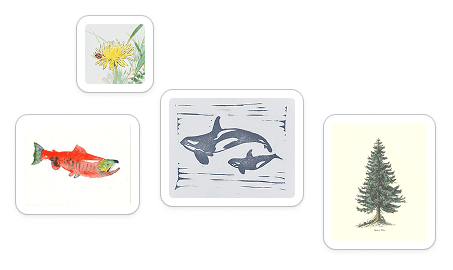
A platform to discover free and low-cost activities— so kids can learn, play, and socialize offline.
Spruce is a free platform that helps low-income families in Vancouver discover art gallery workshops, swim lessons, concerts, coding camps in one simple search.
TIMELINE
48 hours (UBC UXathon 2026)
ROLE
Product Designer
RECOGNITION
🏆 Best UI Design
THE BRIEF
How might we help families give their kids a life offline?
The initial prompt: In a world that rewards being always on, how might we design an experience that helps people set and keep boundaries to make recovery time feel socially safe, rewarding, and easy to sustain?
OUR REFRAME
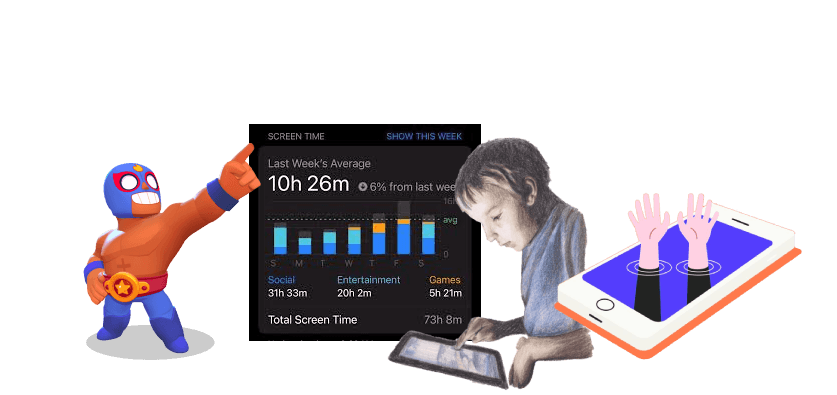
How might we help low-income families give their children opportunities to participate in third-spaces, to create self-sustainable habits that prevent digital fatigue and long-term phone addiction?
I brought up an article I came across about lower-income kids had higher screen-time compared to their more affluent peers who spend their free time in other ways. We started to research the exact pain points we were addressing, through interviews with mentors at the event who were also parents, and by reading online forums. (Reddit, Facebook, etc)
IDENTIFIED 4 PROBLEMS
01
As the coronavirus disease 2019 (COVID-19) has continued for a...
pmc.ncbi.nlm.nih.gov
02
Registration fees, equipment costs, time from work, and transportation expenses.
03
Free programs exist, but are scattered across websites, community boards, and social media groups.
04
Working parents have little capacity to research, register, and transport multiple children to their activities.
SOLUTION IDEATION
Helpful, easy to use, inviting
We came up with a lot of features that could reduce friction and maximize accessibility for our target users. Based on further research, we decided to create 4 main features.
Home page
I chose to include an image of a family at Science World and not a generic stock photo to make Spruce feel personal to the city. That's also the reason I suggested the name "Spruce"— after the real street in Vancouver.

Activities
You can filter free and low-cost activities by neighbourhood, age group, and descriptive type tags. This addresses the information gap and streamlines the research flow, reducing the time it takes to find and register for activities.

Resources
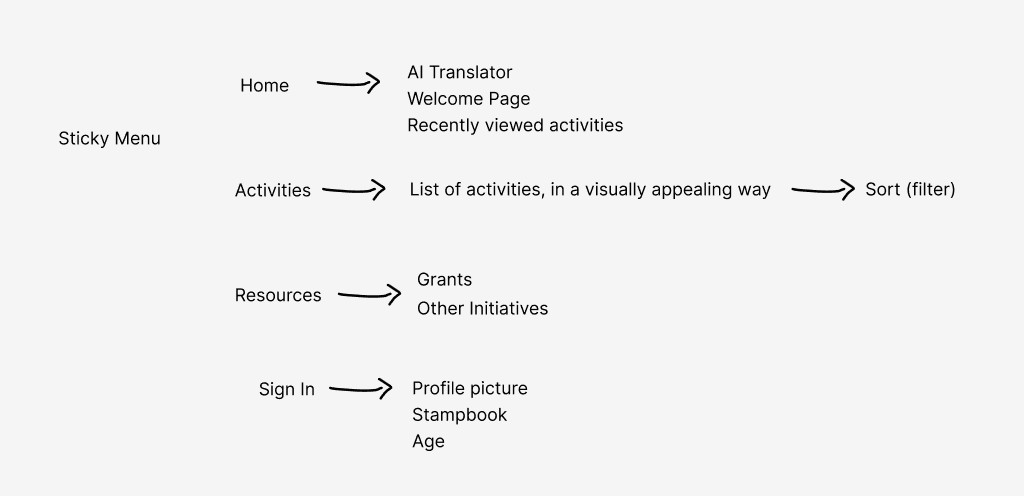
I researched relevant grants, subsidies, and community resources specifically available for lower-income families in Canada. This was our best solution to solve the money problem with what's in our control.
Profiles
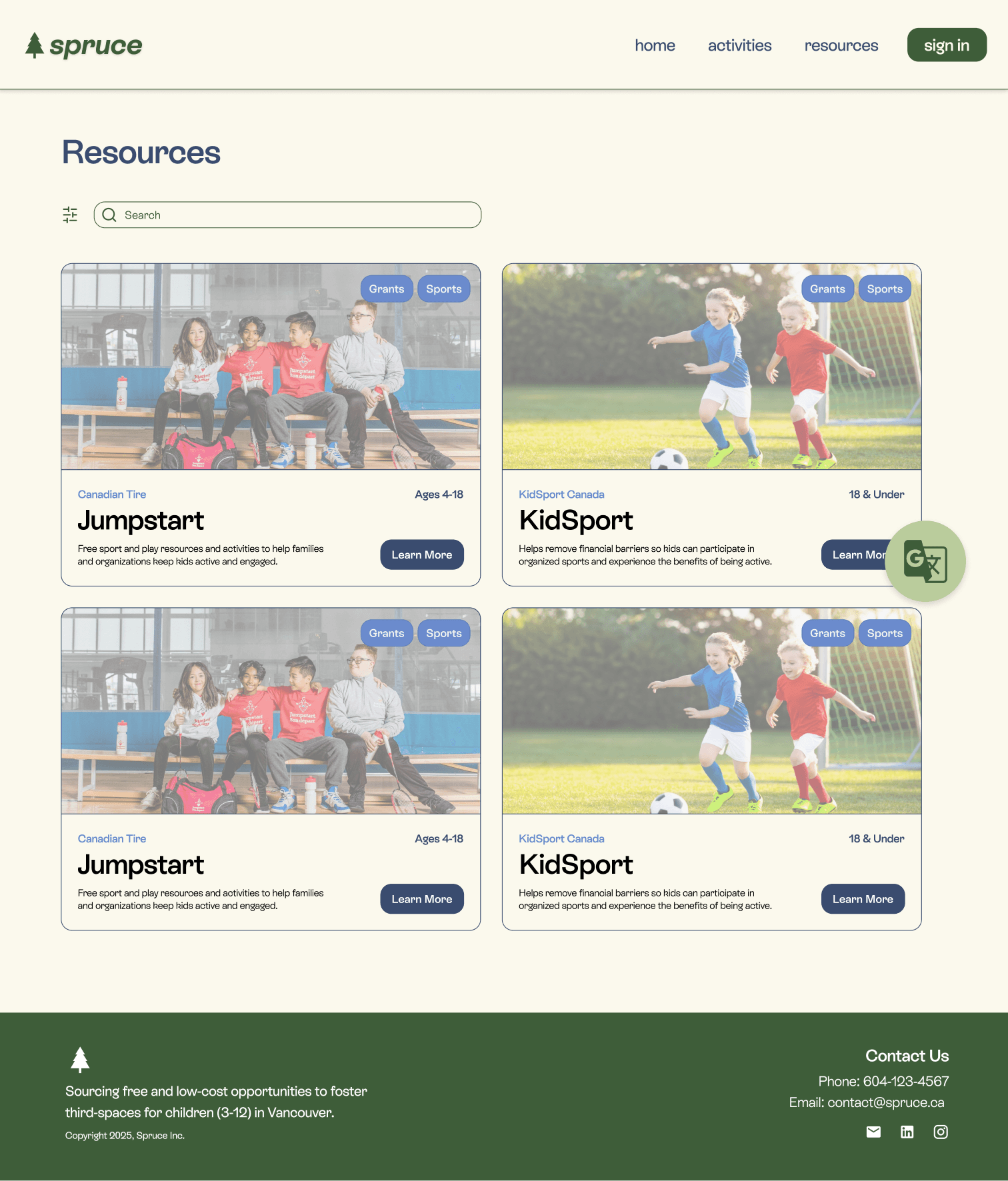
We created profiles for parents and each child, so you can easily access information about current activities, and browse seamlessly through the activities your profile is eligible for based on age, gender, and availability provided.

DESIGN FEATURES THAT WORK FOR EVERYONE
Accessibility through translation


You might have noticed— we have the translate feature on every page! Complete with sound and search, we created this with Vancouver's diverse community in mind.
Mobile or Desktop?
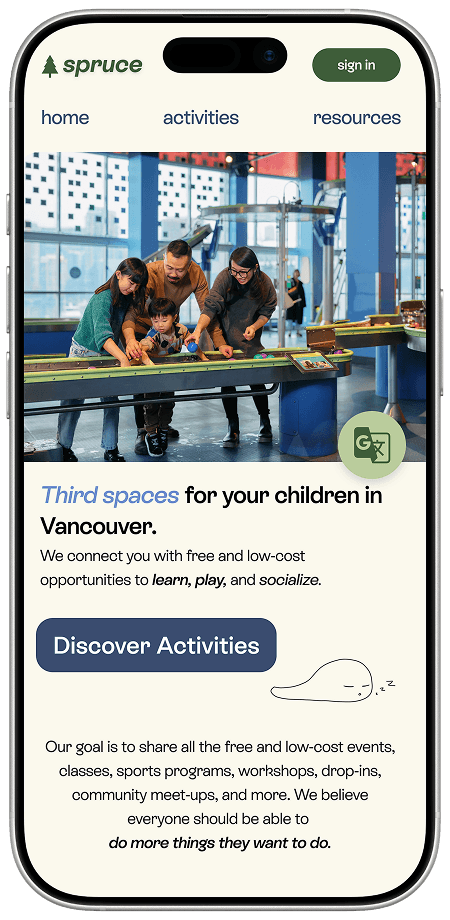
This was one of our biggest debates, due to time constraints.
One the pro-mobile side: my teammates expected that lower-income parents would be less likely to own laptops or PCs. Spruce should be usable on the go.
On the pro-desktop side: larger screens, for more serious decisions, and better focus.
One of our mentors brought up a point we hadn't considered: What if they didn't have a phone? To design for the lowest possible common denominator, a desktop version would make more sense, since anyone is able to log into a library computer.
REFLECTIONS
Reframing is a design skill
The initial prompt was vague and didn't lead us to anything obvious. The most valuable thing I did at UXathon was rewriting the problem statement. A better question unlocks better solutions.